1. Beranda
  2. Bank soal
  3. SMA/SMK
  4. Bahasa Inggris Tingkat Lanjut
  5. Contoh Soal Resmi TKA Bahasa Inggris Tingkat Lanjut

Soal Contoh Soal Resmi TKA Bahasa Inggris Tingkat Lanjut

10 soal Bahasa Inggris Tingkat Lanjut TKA SMA/SMK · Soal Resmi TKA — Contoh soal resmi dari Pusmendik Kemendikdasmen.

Coba kerjakan dulu di kertas. Untuk mengecek jawaban dan membaca pembahasan, tekan Jawab & lihat pembahasan lalu masuk dengan akun gratismu.

Soal 1

Aplikasi

AI is increasingly used in various areas of life, including the workplace. While some support this development, others express concern. Below are arguments for and against the use of AI at work.

Supporters present three main points. First, efficiency and productivity. AI can handle repetitive, monotonous tasks without fatigue, allowing employees to focus on more complex and creative work. This increases output and saves time. Second, better decision- making. AI can analyze vast amounts of data quickly, identifying patterns and trends that help managers make informed, data-driven decisions. This leads to more accurate forecasts, improved employee engagement, and better overall results. Third, learning and development. AI can enhance employee engagement by offering personalized training. AI systems can detect skill gaps and recommend tailored programs, helping employees grow. This benefits both workers—by boosting confidence and capability—and companies—by fostering more skilled, loyal, and satisfied staff.

Critics, however, raise several concerns. First, job displacement. As AI takes over tasks once handled by humans, there’s growing fear of job loss, causing stress among workers. Second, lack of human touch. Despite its capabilities, AI cannot replicate the empathy, emotional intelligence, and connection offered by human leaders—essential in many roles. Third, ethical and privacy issues. Concerns about data use require clear policies to ensure fairness, transparency, and respect for privacy, maintaining employee trust.

Conclusion: AI should be used in the workplace, but with proper regulations to maximize benefits and minimize risks. A cautious, well- planned approach is essential for the future
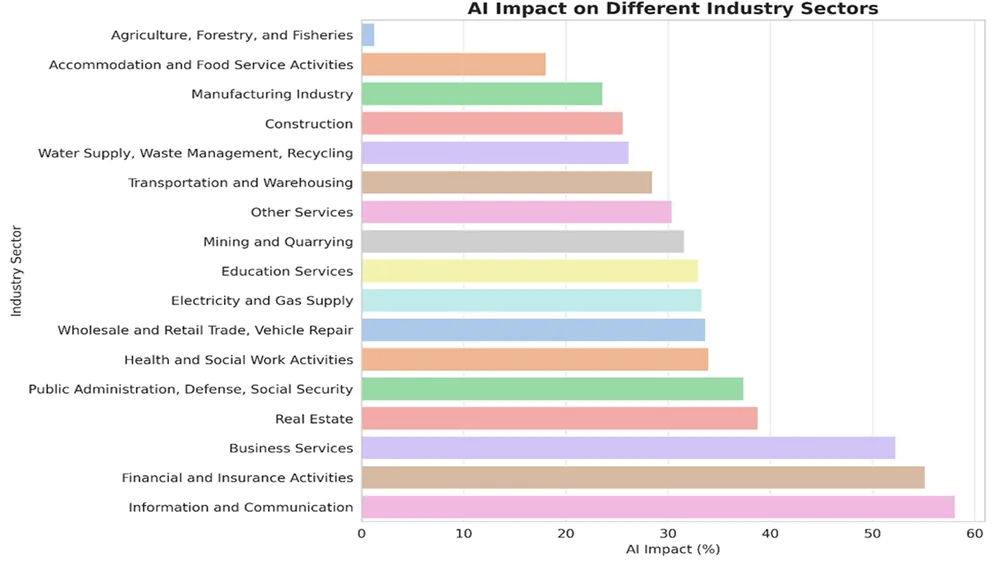
Based on the information given, Which industry sectors are heavily impacted by AI?

Click the Yes or No option for each statement!

PernyataanYesNo

Information and communication

Financial and insurance activities

Agriculture, Forestry and Fisheries

Sumber: Contoh soal TKA — Pusmendik Kemendikdasmen · lihat aslinya

Soal 2

Aplikasi

AI is increasingly used in various areas of life, including the workplace. While some support this development, others express concern. Below are arguments for and against the use of AI at work.

Supporters present three main points. First, efficiency and productivity. AI can handle repetitive, monotonous tasks without fatigue, allowing employees to focus on more complex and creative work. This increases output and saves time. Second, better decision- making. AI can analyze vast amounts of data quickly, identifying patterns and trends that help managers make informed, data-driven decisions. This leads to more accurate forecasts, improved employee engagement, and better overall results. Third, learning and development. AI can enhance employee engagement by offering personalized training. AI systems can detect skill gaps and recommend tailored programs, helping employees grow. This benefits both workers—by boosting confidence and capability—and companies—by fostering more skilled, loyal, and satisfied staff.

Critics, however, raise several concerns. First, job displacement. As AI takes over tasks once handled by humans, there’s growing fear of job loss, causing stress among workers. Second, lack of human touch. Despite its capabilities, AI cannot replicate the empathy, emotional intelligence, and connection offered by human leaders—essential in many roles. Third, ethical and privacy issues. Concerns about data use require clear policies to ensure fairness, transparency, and respect for privacy, maintaining employee trust.

Conclusion: AI should be used in the workplace, but with proper regulations to maximize benefits and minimize risks. A cautious, well- planned approach is essential for the future

Paragraph two mainly discussed AI as…

  1. A

    a tool to enhance workplace productivity and employee growth.

  2. B

    the cause of job losses and emotional stress among workers.

  3. C

    a system that replaces human leaders in decision-making.

  4. D

    a machine incapable of human empathy and connection.

  5. E

    the threat to employee’s privacy and data security.

Sumber: Contoh soal TKA — Pusmendik Kemendikdasmen · lihat aslinya

Soal 3

Aplikasi

AI is increasingly used in various areas of life, including the workplace. While some support this development, others express concern. Below are arguments for and against the use of AI at work.

Supporters present three main points. First, efficiency and productivity. AI can handle repetitive, monotonous tasks without fatigue, allowing employees to focus on more complex and creative work. This increases output and saves time. Second, better decision- making. AI can analyze vast amounts of data quickly, identifying patterns and trends that help managers make informed, data-driven decisions. This leads to more accurate forecasts, improved employee engagement, and better overall results. Third, learning and development. AI can enhance employee engagement by offering personalized training. AI systems can detect skill gaps and recommend tailored programs, helping employees grow. This benefits both workers—by boosting confidence and capability—and companies—by fostering more skilled, loyal, and satisfied staff.

Critics, however, raise several concerns. First, job displacement. As AI takes over tasks once handled by humans, there’s growing fear of job loss, causing stress among workers. Second, lack of human touch. Despite its capabilities, AI cannot replicate the empathy, emotional intelligence, and connection offered by human leaders—essential in many roles. Third, ethical and privacy issues. Concerns about data use require clear policies to ensure fairness, transparency, and respect for privacy, maintaining employee trust.

Conclusion: AI should be used in the workplace, but with proper regulations to maximize benefits and minimize risks. A cautious, well- planned approach is essential for the future

According to the text, as a student who will soon join the workforce, what should you do to compete with AI?

There is more than one correct answer. Click on every correct answer!

Pilih SEMUA jawaban yang benar.

  1. A

    Improve your emotional intelligence

  2. B

    Avoid industries where AI is widely applied

  3. C

    Undergo personalized training to close skill gaps

  4. D

    Switch to jobs with minimal technology involvement

  5. E

    Focus on tasks that require creativity and complex thinking

Sumber: Contoh soal TKA — Pusmendik Kemendikdasmen · lihat aslinya

Soal 4

Aplikasi

Teks untuk soal nomor 4 s.d. 6!
In recent years, the world has seen a big change in how people pay
for things. More and more people, especially young ones, prefer using
digital payment methods like e-wallets, mobile banking, and
contactless cards. This new trend has given rise to what many call the
“cashless generation.”
One main reason for this shift is convenience. Paying with a phone or
card is faster and easier than carrying coins and bills. People can now
buy food, shop online, or even pay for public transport with just a tap.
It also helps reduce the risk of theft since there is no physical money
to lose.
Another reason is the growth of technology. With smartphones
becoming common and the internet being more available, digital
payments have become part of daily life. Many schools and cafes now
even refuse to accept cash, encouraging young people to adapt to this
modern lifestyle.
However, there are some concerns. Some people argue that going
cashless can exclude older generations or those who do not have
access to smartphones or bank accounts. Others worry about privacy
and security, as digital payments can be tracked and hacked.
Despite these issues, the cashless trend continues to grow.
Governments and businesses are working to make digital payments
more secure and more available to everyone. It seems likely that the
future will be even more digital.
In conclusion, the cashless generation represents a big change in how
we handle money. While there are both advantages and
disadvantages, it is clear that cashless payments offer many benefits
in terms of speed and convenience. As long as we ensure that everyone
can join this movement, the cashless future could be a smart and
inclusive one.

According to the text, what are the main reasons why many people are going cashless?

Pilih SEMUA jawaban yang benar.

  1. A

    Digital payments are quicker and more practical

  2. B

    People want to save more by using e-wallets

  3. C

    Schools and cafes have started refusing cash

  4. D

    Using cards helps people earn extra income

  5. E

    Governments are banning physical money

Sumber: Contoh soal TKA — Pusmendik Kemendikdasmen · lihat aslinya

Soal 5

Aplikasi

Teks untuk soal nomor 4 s.d. 6!
In recent years, the world has seen a big change in how people pay
for things. More and more people, especially young ones, prefer using
digital payment methods like e-wallets, mobile banking, and
contactless cards. This new trend has given rise to what many call the
“cashless generation.”
One main reason for this shift is convenience. Paying with a phone or
card is faster and easier than carrying coins and bills. People can now
buy food, shop online, or even pay for public transport with just a tap.
It also helps reduce the risk of theft since there is no physical money
to lose.
Another reason is the growth of technology. With smartphones
becoming common and the internet being more available, digital
payments have become part of daily life. Many schools and cafes now
even refuse to accept cash, encouraging young people to adapt to this
modern lifestyle.
However, there are some concerns. Some people argue that going
cashless can exclude older generations or those who do not have
access to smartphones or bank accounts. Others worry about privacy
and security, as digital payments can be tracked and hacked.
Despite these issues, the cashless trend continues to grow.
Governments and businesses are working to make digital payments
more secure and more available to everyone. It seems likely that the
future will be even more digital.
In conclusion, the cashless generation represents a big change in how
we handle money. While there are both advantages and
disadvantages, it is clear that cashless payments offer many benefits
in terms of speed and convenience. As long as we ensure that everyone
can join this movement, the cashless future could be a smart and
inclusive one.

Who is the author writing this text for?

Pilih SEMUA jawaban yang benar.

  1. A

    Teenagers and young adults adapting to digital payment.

  2. B

    Government officials promoting cashless policies.

  3. C

    Bank staff working on mobile banking systems.

  4. D

    Students learning about modern lifestyles.

  5. E

    People unfamiliar with digital technology.

Sumber: Contoh soal TKA — Pusmendik Kemendikdasmen · lihat aslinya

Soal 6

Aplikasi

Teks untuk soal nomor 4 s.d. 6!
In recent years, the world has seen a big change in how people pay
for things. More and more people, especially young ones, prefer using
digital payment methods like e-wallets, mobile banking, and
contactless cards. This new trend has given rise to what many call the
“cashless generation.”
One main reason for this shift is convenience. Paying with a phone or
card is faster and easier than carrying coins and bills. People can now
buy food, shop online, or even pay for public transport with just a tap.
It also helps reduce the risk of theft since there is no physical money
to lose.
Another reason is the growth of technology. With smartphones
becoming common and the internet being more available, digital
payments have become part of daily life. Many schools and cafes now
even refuse to accept cash, encouraging young people to adapt to this
modern lifestyle.
However, there are some concerns. Some people argue that going
cashless can exclude older generations or those who do not have
access to smartphones or bank accounts. Others worry about privacy
and security, as digital payments can be tracked and hacked.
Despite these issues, the cashless trend continues to grow.
Governments and businesses are working to make digital payments
more secure and more available to everyone. It seems likely that the
future will be even more digital.
In conclusion, the cashless generation represents a big change in how
we handle money. While there are both advantages and
disadvantages, it is clear that cashless payments offer many benefits
in terms of speed and convenience. As long as we ensure that everyone
can join this movement, the cashless future could be a smart and
inclusive one.

How does the writer present different viewpoints about the topic?

  1. A

    By showing only negative effects of a cashless society

  2. B

    By clearly supporting the idea of going fully digital

  3. C

    By including statistics from international research

  4. D

    By giving emotional opinions from young people

  5. E

    By mentioning pros and cons of going cashless

Sumber: Contoh soal TKA — Pusmendik Kemendikdasmen · lihat aslinya

Soal 7

Aplikasi

Teks untuk soal nomor 7 s.d. 10!

Smart Spending and Consumer Awareness

In today’s world, where people encounter many kinds of goods and services every day, it is important to learn how to spend money in a smart way. Smart spending means using money carefully and with a plan. This idea is part of something broader called financial literacy, which helps people make good decisions about their money.

Smart spending starts with understanding the difference between needs and wants. Needs are things people must have to live, like food, water, and shelter. Wants are things people like to have but can live without, such as new clothes, phones, or eating out. People who understand this can manage their money more effectively.

Another aspect of smart spending is planning. Before buying something, it is helpful to make a list or create a budget. A budget is a simple plan that shows how much money comes in and how much goes out. It helps people avoid overspending or buying things they do not really need. This allows them to save money for the future or for something important, like education or housing.

Being a smart consumer also means being aware of how companies try to persuade people to buy more. Many stores use strategies such as big signs, sales, and colorful advertisements to make people feel they need to buy something. Sometimes, people buy things without thinking carefully. This is called impulse buying. A smart buyer will pause and think before making a purchase. They might ask, “Do I really need this? Is this the best price?”

In the academic context, students can practice smart spending in daily life—for example, when buying food at school, getting school supplies, or saving their allowance. Students who learn this skill early will be better prepared to manage their money as they grow up.

In short, smart spending and consumer awareness help people make better decisions with their money. With good habits and thoughtful planning, anyone can learn to use money wisely and avoid financial problems in the future.

According to the text, the purpose of a budget is to ….

  1. A

    help people buy more of the things they enjoy

  2. B

    make it easier to decide what to buy first

  3. C

    show how much money comes in and goes out

  4. D

    remind people of the products they want to buy

  5. E

    help people find better stores with lower prices

Sumber: Contoh soal TKA — Pusmendik Kemendikdasmen · lihat aslinya

Soal 8

Aplikasi

Teks untuk soal nomor 7 s.d. 10!

Smart Spending and Consumer Awareness

In today’s world, where people encounter many kinds of goods and services every day, it is important to learn how to spend money in a smart way. Smart spending means using money carefully and with a plan. This idea is part of something broader called financial literacy, which helps people make good decisions about their money.

Smart spending starts with understanding the difference between needs and wants. Needs are things people must have to live, like food, water, and shelter. Wants are things people like to have but can live without, such as new clothes, phones, or eating out. People who understand this can manage their money more effectively.

Another aspect of smart spending is planning. Before buying something, it is helpful to make a list or create a budget. A budget is a simple plan that shows how much money comes in and how much goes out. It helps people avoid overspending or buying things they do not really need. This allows them to save money for the future or for something important, like education or housing.

Being a smart consumer also means being aware of how companies try to persuade people to buy more. Many stores use strategies such as big signs, sales, and colorful advertisements to make people feel they need to buy something. Sometimes, people buy things without thinking carefully. This is called impulse buying. A smart buyer will pause and think before making a purchase. They might ask, “Do I really need this? Is this the best price?”

In the academic context, students can practice smart spending in daily life—for example, when buying food at school, getting school supplies, or saving their allowance. Students who learn this skill early will be better prepared to manage their money as they grow up.

In short, smart spending and consumer awareness help people make better decisions with their money. With good habits and thoughtful planning, anyone can learn to use money wisely and avoid financial problems in the future.

What is the best summary of the text?

  1. A

    Financial literacy helps people plan their shopping and find the best prices.

  2. B

    Needs and wants are the same and should be treated equally when spending money.

  3. C

    A smart buyer thinks carefully before buying and considers needs over wants

  4. D

    Planning a budget is useful because it helps people spend more money on fun activities.

  5. E

    Smart spending and consumer awareness help people make better decisions with their money.

Sumber: Contoh soal TKA — Pusmendik Kemendikdasmen · lihat aslinya

Soal 9

Aplikasi

Teks untuk soal nomor 7 s.d. 10!

Smart Spending and Consumer Awareness

In today’s world, where people encounter many kinds of goods and services every day, it is important to learn how to spend money in a smart way. Smart spending means using money carefully and with a plan. This idea is part of something broader called financial literacy, which helps people make good decisions about their money.

Smart spending starts with understanding the difference between needs and wants. Needs are things people must have to live, like food, water, and shelter. Wants are things people like to have but can live without, such as new clothes, phones, or eating out. People who understand this can manage their money more effectively.

Another aspect of smart spending is planning. Before buying something, it is helpful to make a list or create a budget. A budget is a simple plan that shows how much money comes in and how much goes out. It helps people avoid overspending or buying things they do not really need. This allows them to save money for the future or for something important, like education or housing.

Being a smart consumer also means being aware of how companies try to persuade people to buy more. Many stores use strategies such as big signs, sales, and colorful advertisements to make people feel they need to buy something. Sometimes, people buy things without thinking carefully. This is called impulse buying. A smart buyer will pause and think before making a purchase. They might ask, “Do I really need this? Is this the best price?”

In the academic context, students can practice smart spending in daily life—for example, when buying food at school, getting school supplies, or saving their allowance. Students who learn this skill early will be better prepared to manage their money as they grow up.

In short, smart spending and consumer awareness help people make better decisions with their money. With good habits and thoughtful planning, anyone can learn to use money wisely and avoid financial problems in the future.

Which of the following opinions are supported by strong reasoning or examples in the text?

There is more than one correct answer. Click on every correct answer!

Pilih SEMUA jawaban yang benar.

  1. A

    Smart spending helps people avoid buying things they do not really need.

  2. B

    Buying new clothes or eating out is always a waste of money.

  3. C

    A budget can help people save money for their future needs.

  4. D

    People who spend without a plan are bad at handling money.

  5. E

    Students learning money skills will manage their money better as adults.

Sumber: Contoh soal TKA — Pusmendik Kemendikdasmen · lihat aslinya

Soal 10

Aplikasi

Teks untuk soal nomor 7 s.d. 10!

Smart Spending and Consumer Awareness

In today’s world, where people encounter many kinds of goods and services every day, it is important to learn how to spend money in a smart way. Smart spending means using money carefully and with a plan. This idea is part of something broader called financial literacy, which helps people make good decisions about their money.

Smart spending starts with understanding the difference between needs and wants. Needs are things people must have to live, like food, water, and shelter. Wants are things people like to have but can live without, such as new clothes, phones, or eating out. People who understand this can manage their money more effectively.

Another aspect of smart spending is planning. Before buying something, it is helpful to make a list or create a budget. A budget is a simple plan that shows how much money comes in and how much goes out. It helps people avoid overspending or buying things they do not really need. This allows them to save money for the future or for something important, like education or housing.

Being a smart consumer also means being aware of how companies try to persuade people to buy more. Many stores use strategies such as big signs, sales, and colorful advertisements to make people feel they need to buy something. Sometimes, people buy things without thinking carefully. This is called impulse buying. A smart buyer will pause and think before making a purchase. They might ask, “Do I really need this? Is this the best price?”

In the academic context, students can practice smart spending in daily life—for example, when buying food at school, getting school supplies, or saving their allowance. Students who learn this skill early will be better prepared to manage their money as they grow up.

In short, smart spending and consumer awareness help people make better decisions with their money. With good habits and thoughtful planning, anyone can learn to use money wisely and avoid financial problems in the future.

After reading the text, as a senior high school student, what can you do to be considered a smart shopper?

There is more than one correct answer. Click on every correct answer!

Pilih SEMUA jawaban yang benar.

  1. A

    Create a list before buying snacks in the supermarket.

  2. B

    Identify their personal needs versus wants.

  3. C

    Think carefully before purchasing school supplies.

  4. D

    Companies should not use signs and pictures to attract buyers.

  5. E

    Buying school supplies is not necessary if students have old ones.

Sumber: Contoh soal TKA — Pusmendik Kemendikdasmen · lihat aslinya

Sudah coba semua? Cek jawabanmu!

Kerjakan bab Contoh Soal Resmi TKA Bahasa Inggris Tingkat Lanjut secara interaktif: langsung dinilai, lengkap dengan kunci dan pembahasan tiap soal.

Kerjakan gratis sekarang

Belum punya akun? Daftar gratis — cukup email & sandi.